

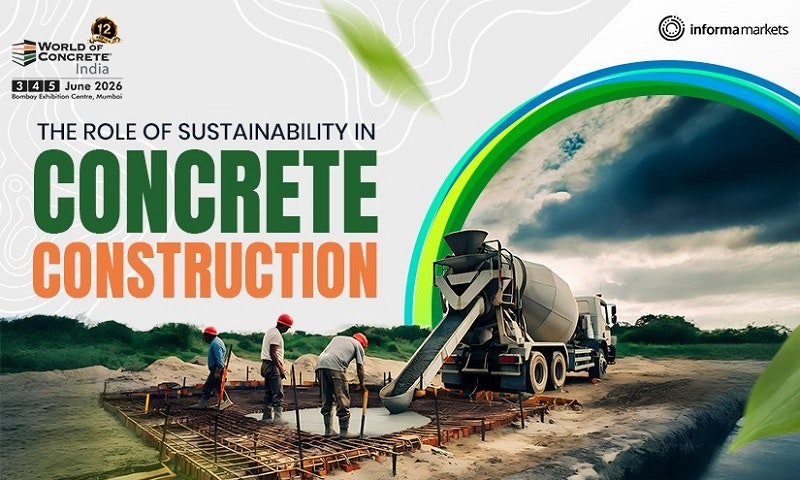
The Role of Sustainability in Concrete Construction Sustainability has become a defining force in the global construction industry, and concrete construction is at the center of this transformation. As urbanization accelerates and infrastructure demands grow, the industry faces increasing pressure to reduce environmental impact while maintaining strength, durability, and cost efficiency. For India, one of the world’s largest producers and consumers of concrete, sustainable construction practices are no longer optional; they are essential for long-term growth and resilience. Concrete has long been valued for its versatility, longevity, and structural performance. However, traditional concrete production is also associated with high resource consumption and carbon emissions. Today, innovation, policy shifts, and technological advancements are reshaping how concrete is designed, produced, and used, making sustainability a core pillar of modern concrete construction. Why Sustainability Matters in Concrete Construction Concrete is the most widely used construction material globally, and cement production alone contributes significantly to industrial emissions. With large-scale infrastructure projects, smart cities, housing developments, and transportation networks expanding across India, the environmental footprint of concrete construction has become a key concern. Sustainable concrete construction focuses on reducing emissions, conserving natural resources, improving energy efficiency, and extending the service life of structures. Beyond environmental benefits, sustainable practices also deliver economic and operational advantages, including reduced lifecycle costs, improved compliance with regulations, and enhanced project credibility. Low-Carbon and Green Concrete Solutions One of the most impactful developments in sustainable concrete construction is the rise of low-carbon and green concrete. These solutions aim to reduce cement content by incorporating supplementary cementitious materials such as fly ash, slag, and silica fume. Alternative binders and blended cements are also gaining acceptance for their ability to deliver comparable strength while lowering environmental impact. Green concrete does not compromise on performance. In fact, many sustainable mixes offer enhanced durability, improved resistance to chemical attack, and longer service life. For infrastructure exposed to harsh environmental conditions, this translates into reduced maintenance and fewer repairs over time. Resource Efficiency and Circular Construction Sustainability in concrete construction also extends to how materials are sourced and reused. The industry is increasingly embracing circular construction principles, where waste is minimized, and materials are reused or recycled wherever possible. Recycled aggregates derived from construction and demolition waste are being integrated into new concrete mixes, reducing dependence on natural sand and stone. Efficient batching systems, optimized mix designs, and precise quality control further reduce material wastage on-site. These practices not only conserve natural resources but also address growing concerns around material scarcity and supply chain volatility. Energy-Efficient Production and Processes Concrete sustainability is not limited to materials, it also encompasses manufacturing and construction processes. Modern cement plants and batching facilities are adopting energy-efficient technologies, waste heat recovery systems, and cleaner fuel alternatives to reduce operational emissions. On construction sites, improved curing techniques, optimized formwork systems, and prefabrication methods help reduce energy use and water consumption. Prefabricated concrete elements manufactured in controlled environments minimize waste, improve quality consistency, and shorten construction timelines, contributing to overall sustainability goals. Durability and Lifecycle Performance A critical but often overlooked aspect of sustainability is durability. Structures that last longer with minimal maintenance are inherently more sustainable. Concrete’s inherent strength and resistance to fire, moisture, and weather make it a key material for long-lasting infrastructure. Innovations such as high-performance concrete, self-healing concrete, and corrosion-resistant reinforcements are extending the lifespan of buildings and infrastructure. By reducing the need for frequent repairs or early replacement, these advancements significantly lower the environmental impact over a structure’s entire lifecycle. Smart Technologies and Sustainable Design Digital tools are playing a growing role in sustainable concrete construction. Building Information Modeling (BIM), digital twins, and advanced simulation software allow engineers and designers to optimize material usage, reduce overdesign, and improve construction efficiency. Smart monitoring systems embedded within concrete structures provide real-time data on stress, temperature, and performance. This proactive approach enables predictive maintenance, enhances safety, and ensures that resources are used efficiently throughout the structure’s life. Regulatory Push and Market Demand Government regulations, green building certifications, and sustainability benchmarks are accelerating the adoption of sustainable concrete practices. Developers and contractors are increasingly required to meet environmental performance standards, particularly in large infrastructure and commercial projects. At the same time, clients, investors, and end users are demanding environmentally responsible construction. Sustainability is now closely linked to brand value, project viability, and long-term returns, making it a strategic priority across the construction ecosystem. The Road Ahead for Sustainable Concrete The future of concrete construction lies in continuous innovation and collaboration across the value chain. Material manufacturers, engineers, contractors, and policymakers must work together to scale sustainable solutions and make them commercially viable. Emerging developments such as carbon capture in cement production, carbon-negative concrete, and energy-generating concrete surfaces signal a shift toward a more regenerative construction model. As these technologies mature, sustainability will move from being a differentiator to a baseline expectation. Conclusion Sustainability is reshaping the role of concrete in construction, transforming it from a resource-intensive material into a solution-driven, future-ready building block. By embracing low-carbon materials, efficient processes, digital technologies, and long-term performance thinking, the concrete industry is laying the foundation for resilient and responsible growth. For stakeholders at World of Concrete India, sustainability represents not just an environmental responsibility, but an opportunity to lead innovation, enhance competitiveness, and build infrastructure that stands the test of time. |
INFORMA ALLSECURE
To ensure safe and effective experience at the tradeshow
Informa launches �AllSecure�, an approach for enhanced health& safety standards at its events in the NEW NORMAL.
Whether they are exhibitors, attendees, visitors, speakers or sponsors, customers come to events to connect, learn, know more and to do business effectively, safety & confidence. To conduct physical trade exhibitions amidst the new normal, Informa Markets in India has created the �AllSecure� safety standard. A detailed set of enhanced measures, AllSecure provides attendees the reassurance and confidence that they are participating in a safe and controlled environment. These international protocols are based on the broader principles of Physical Distancing, Protect & Detect, Cleaning & Hygiene and detailed Communications on these principles. It includes a commitment to ten key priorities across all Informa events, as well as fuller range of standards & recommendations that will be followed at our events wherever applicable & possible.

FOR BOOKINGS & PARTNERSHIP OPPORTUNITIES

Saiprasad Terde
📞+91 99200 50415
✉ saiprasad.Terde@informa.com

Iyer Narayanan
📞 +91 99673 53437
✉ iyer.narayanan@informa.com

Vinaykumar Naik
📞 +91 81475 59749
✉ Vinaykumar.Naik@informa.com
FOR SPEAKING OPPORTUNITY

Amit Sharma
📞 +91 99109 55222
✉ amit.sharma@informa.com
FOR MARKETING & STRATEGIC ALLIANCES

Pankaj Sharma
📞 +91 99713 65776
✉ pankaj.sharma@informa.com

Madhur Dave
📞 +91 70307 94902
✉ madhur.dave@informa.com

Shantanu Baraskar
✉ shantanu.baraskar.in@informa.com
INTERNATIONAL CONTACT FOR SPACE & PARTNERSHIP
Debora Baldinelli
📞 + 39 02 86897000
✉ info@invernizzigroup.com
Country: Italy
Company Name: Invernizzi International Sales
Website: www.invernizzigroup.com
Michael Pittscheidt
📞 0049 - 2251 - 8665658
✉ info@pittscheidt.de
Country: Germany
Company Name: Messe Marketing
Website: https://www.pittscheidt.de
Website by: Xpoteck
Your feedback matters!
Please take a moment to rate our business on Google and share your experience with us.